Tracking expenses ensures every cost is recorded accurately, categorized consistently, and reflected in your financial reports—keeping your business compliant and financially healthy.
Tracking Business Expenses
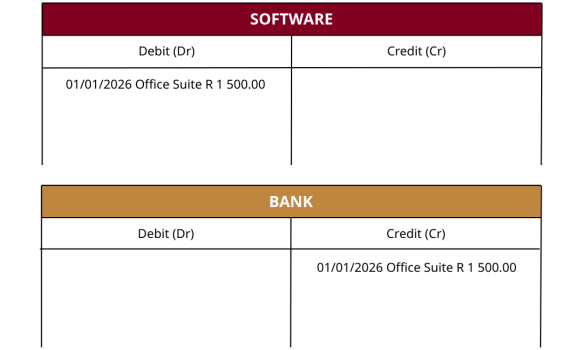
Tracking expenses means recording every cost your business incurs. In double-entry accounting, expenses are recorded as:
- Debits to the relevant expense account
Credits to bank or accounts payable
Accurate expense tracking is essential for managing cash flow, reducing tax liability, and understanding profitability.
Example
Your business buys a software subscription for an office suite for R 1 500.00 on 1st January 2026.
Categorizing Expenses
Categorizing expenses is essential because each transaction must be allocated to the correct account so that your chart of accounts and financial reports accurately reflect the business’s position. For example buying printer paper should be recorded as an Office Supplies expense, paying rent as a Rent expense, and salaries as a Payroll expense. To keep records reliable every transaction must include both a debit and a credit, and similar transactions should always be categorized consistently. If you’re unsure where something belongs, your chart of accounts serves as the master list of categories to guide you.
Why Expense Tracking Matters
Proper expense tracking is important because it helps a business manage cash flow effectively by monitoring where money is going. It also makes tax filing easier and can reduce liability by ensuring all deductible expenses are recorded. Tracking expenses allows a business to understand its true profitability, since costs are matched against income. In addition, keeping accurate records supports organized financial reporting and ensures compliance with SARS requirements, making audits and reviews smoother.
Summary
This article explains the importance of accurate expense categorization and tracking in accounting. It begins with the role of a trial balance which ensures that total debits equal total credits, confirming the accuracy of ledger accounts. It then highlights how categorizing expenses correctly such as recording printer paper under Office Supplies, rent under Rent and salaries under Payroll which keeps financial records consistent and reliable. Proper expense tracking is shown to be vital for managing cash flow, simplifying tax filing, reducing liability, and ensuring compliance with SARS requirements. Ultimately the article emphasizes that consistent categorization and diligent tracking provide a clear picture of profitability and make audits and financial reporting smoother.