Bookkeeping is the recording of daily financial transactions, while accounting interprets and analyzes those records to guide decisions.
What is Bookkeeping?
Bookkeeping is the process of recording all financial transactions that involve money flowing in and out of your business.
It helps you keep track of:
- The cash and resources your business has available
- Amounts owed to suppliers
- Monthly revenue figures
- Monthly expenses
- Whether your business is making a profit or a loss
What Does a Bookkeeper Do?
A bookkeeper’s role is to:
- Record every transaction related to money entering or leaving the business
- Maintain organized records of source documents (invoices, receipts, bank statements, etc.)
- Ensure the books balance correctly
Assist in preparing financial statements
Proper bookkeeping keeps a business organized, ensures accurate tax payments, and helps identify financial trends—both positive and negative. Without bookkeeping, a business would have no clear picture of whether it is profitable or losing money.
The Difference Between Bookkeeping and Accounting
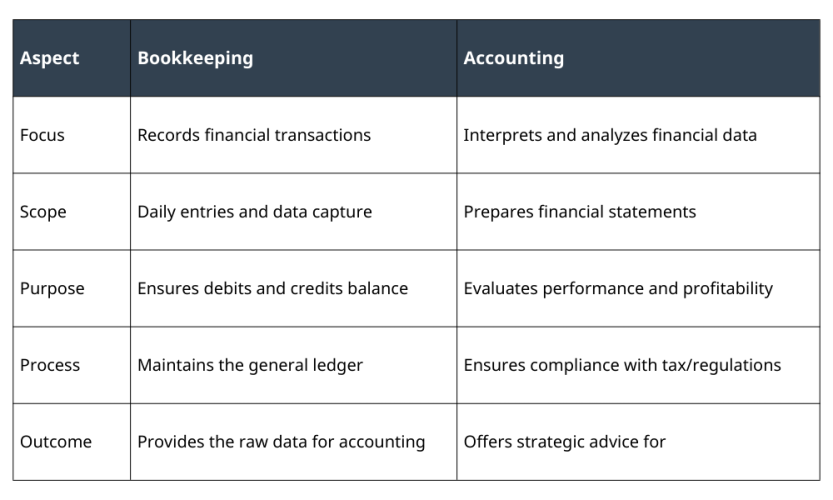
A Simple Analogy
Think of your business as a car:
- Bookkeeping is the dashboard – it shows your speed, fuel level, and mileage.
- Accounting is the mechanic – they look under the hood, explain how the car is running, and help you plan your next trip.