Tracking revenue ensures your books clearly show where income comes from, when it’s earned, and how it flows into your business.
Tracking Revenue
Tracking revenue is about more than just recording sales—it’s about understanding how and when your business earns money.
- In accrual accounting, revenue is recognized when it is earned (e.g., when you issue an invoice).
In cash accounting, revenue is recorded only when it is received.
Every transaction should be recorded with:
- A credit to a revenue account
A corresponding debit to either bank or accounts receivable
Accurate revenue tracking is essential for measuring profitability, preparing financial statements, and ensuring tax compliance.
Example
Customer pays R 5 000.00 for services rendered on 15th December 2025 which aren't on account but is a cash sale.
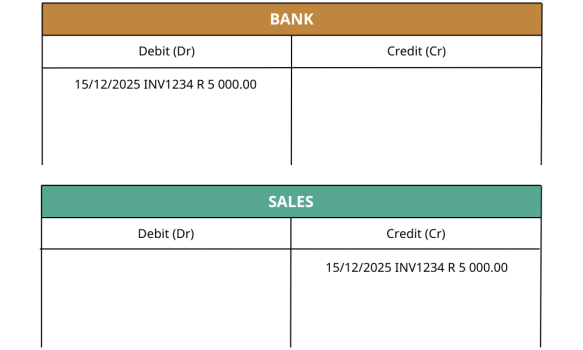
Customer receives services from your business.
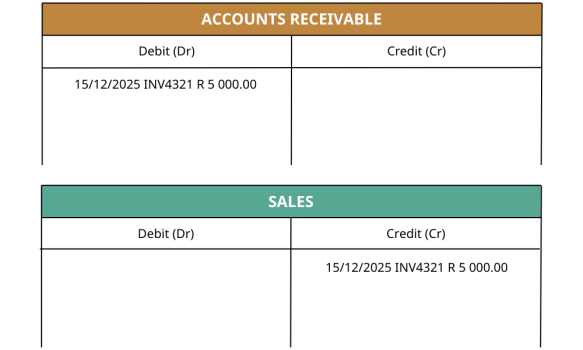
The customer is invoiced for R 5 000.00 on 15th December 2025.
The customer has a 30 day account with the business.
Categorizing Revenue
Each transaction must be allocated to the correct account so that your chart of accounts and reports accurately reflect your financial position and accurate balances.
Key rules:
- Every transaction must include both a debit and a credit.
- Consistency is vital—categorize similar transactions the same way.
- If unsure, check how you categorized similar transactions previously to maintain accuracy.
Why Revenue Tracking Matters
Proper revenue tracking is essential because it allows a business to understand its profitability and make informed decisions. By monitoring revenue closely, managers can manage budgeting and forecasting more effectively, ensuring resources are allocated wisely. Accurate tracking also helps businesses stay compliant with tax requirements and supports the production of reliable financial reports. In addition, maintaining clear records ensures SARS compliance, providing transparency and reducing the risk of errors or disputes during audits or reviews.
Tracking Revenue on payPod
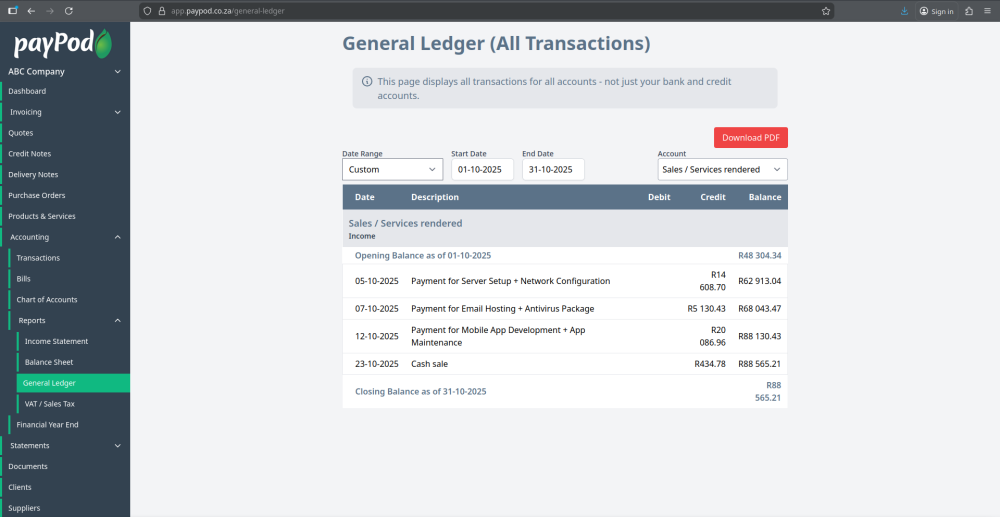
You can track your revenue on payPod by selecting a revenue account on the general ledger with a specific date range.
Below is an example of the Sales/Services Rendered account for October 2025.
Summary
- Business revenue = all income earned by your business
- Revenue is credited; bank or accounts receivable is debited
- Accurate tracking supports budgeting, tax, and profitability
- Use clear categories and keep supporting documents
- Essential for financial reporting and compliance